HELLO BEAUTIFUL SOUL

Why Silence Can Feel Brutal in Anxious Attachment
Silence can feel threatening with anxious attachment because your nervous system often reads missing contact as possible distance or loss. Learn why silence feels so intense and what helps.
"Sometimes, silence just sucks..."
You send a message, put your phone down, and try to stay inside the rest of your day. You make coffee, answer an email, start folding laundry, but part of your attention stays turned toward the silence. Not because anything is clearly wrong. Because nothing has happened yet, and your body has already started noticing that.
A few hours pass, and the silence begins to feel louder than it should. You check your phone without fully meaning to. You reread the last conversation, not looking for words exactly, but for tone, whether something felt different, whether the ending landed colder than you realized at the time.
If you have anxious attachment, silence often does not feel empty. It can feel active, almost physical, because your nervous system is trying to understand whether the absence of contact means distance, disconnection, or something you should already be responding to.
That is why silence can become emotionally loaded so quickly. Before you have facts, your body may already be tightening around possibility. A quiet phone becomes a question. A delayed reply becomes a story your mind starts building while you are still trying to stay reasonable.
And often what makes this confusing is that you may know silence does not automatically mean anything is wrong, while still feeling unable to stop reacting as if something important has shifted.
The body notices missing connection fast, especially when connection has felt uncertain before. What looks like a simple pause from the outside can feel, internally, like standing inside unfinished information your nervous system wants resolved right away.
Why Silence Rarely Feels Neutral With Anxious Attachment
Silence often feels difficult because your nervous system does not experience it as simple absence. It experiences it as missing information, and missing information can quickly become emotionally charged when connection already feels important. A conversation that pauses longer than expected can begin to feel like something changed, even if nothing has actually been said to suggest that.
This is why ordinary moments can suddenly feel heavy. Someone who usually replies in the morning stays quiet until afternoon. A conversation ends without the warmth you expected. Your partner says they are busy, but the quiet afterward still stays with you longer than you want it to. The silence itself becomes noticeable because your body is already trying to understand what it means.
When anxious attachment is active, silence often leaves too much room for interpretation. The mind starts looking backward almost immediately... how did the last message sound, was there something unfinished, did the tone shift before things went quiet. Even when you tell yourself there could be a simple explanation, your attention can stay pulled toward the gap because uncertainty feels unfinished inside the body.
What makes this especially hard is that silence can feel emotionally significant long before there is evidence that it actually is. Your nervous system reacts to the pause first, and that reaction can make the silence seem larger than the moment itself. What might be a normal delay for someone else can feel, internally, like something you need to understand before your body can settle again.
Why Your Body Reacts Before You Know What Silence Means
One of the hardest parts about silence is how quickly your body can react before your mind has decided whether anything is actually happening. You may still be telling yourself there could be a simple explanation - that they are working, driving, tired, distracted - while at the same time noticing your chest tighten or your thoughts begin circling the last interaction. The reaction often starts before logic has had time to settle in.
That is because your nervous system responds to uncertainty first. If connection already carries emotional weight, even a small pause can create activation in the body before there is anything concrete to respond to. You might notice it while doing something ordinary, standing in the kitchen, halfway through a conversation with someone else, looking at your phone after hearing a notification that turns out not to be from them. The body registers the missing contact as something unfinished, and attention narrows around it almost automatically.
This is why silence can feel physical in ways that are hard to explain. Breathing becomes shallower. Focus gets harder. You replay the earlier conversation without meaning to, trying to remember whether there was a shift in tone, whether something small landed differently than you realized at the time. The body starts searching because uncertainty feels like something that needs resolution.
And once that activation begins, silence often stops feeling neutral altogether. What may still be an ordinary pause externally can begin to feel internally like something your nervous system wants answered before it can relax again.

Why Silence Quickly Turns Into Fear Of Abandonment
Silence becomes especially intense when it starts touching something older than the moment itself. At first, it may just feel like waiting. Then slowly, almost without noticing, the mind begins leaning toward meaning: Are they upset? Did something change? Did I say too much? The longer there is no clear signal, the easier it becomes for silence to feel personal.
This is where fear of abandonment often enters quietly. Not necessarily as a dramatic thought, but as a subtle shift in how the silence begins to feel inside your body. A few hours without contact can suddenly seem larger than the day itself because the nervous system is no longer only reacting to what is happening now. It is reacting to what distance has felt like before.... times when closeness became uncertain, when connection changed without warning, or when reassurance was hard to trust for long.
That is why anxious attachment often fills silence with possibility before facts arrive. You may notice yourself imagining explanations that lean toward loss even while another part of you knows there could be many ordinary reasons for the quiet. The body prefers an explanation, even an uncomfortable one, over open uncertainty.
And once fear starts shaping the silence, the urge for reassurance usually follows. Not always because you need a full conversation, but because some part of you wants one clear sign that the connection is still there, so your nervous system can stop treating the quiet like a possible ending.
Why Silence Feels Harder Than Clear Conflict Sometimes
For many people with anxious attachment, clear conflict can actually feel easier to tolerate than silence. Conflict may be uncomfortable, but at least it gives your nervous system something concrete to respond to. There are words, tone, and visible emotion. Even if the conversation is difficult, your body has information it can organize around.
Silence is harder because it offers almost nothing definite. A pause in contact leaves open space, and open space can quickly fill with interpretation. You may find yourself wishing the other person would simply say they are upset, tired, distant, or distracted, because even uncomfortable clarity often feels easier than trying to manage what silence might mean.
This is why someone finally saying, “Sorry, I’ve just had a busy day,” can create such immediate physical relief. The facts may be simple, but your body relaxes because uncertainty has been replaced by something known. The nervous system often calms faster when it no longer has to keep scanning for what is missing.
What makes silence especially difficult is that it can hold many meanings at once, and your body often reacts before it knows which one is true. Until something becomes clear, the pause can feel emotionally larger than the actual situation, simply because uncertainty leaves too much room for fear to grow.
What Helps When Silence Starts Creating A Story
What helps most in these moments is not forcing yourself to stop caring. It is noticing when silence has moved from being a simple pause into a story your body is starting to build. That shift usually happens quietly. At first you are waiting. Then you are checking the time. Then you are replaying what was said earlier, wondering whether something small meant more than it seemed.
A useful place to begin is separating what is actually happening from what fear is adding. The fact may be simple: they have not replied for a few hours. The story may sound much larger: They are upset. They are pulling away. Something changed. Writing those two things down separately can help because anxious attachment often blends present facts with old fear so quickly that they feel like the same thing.
It also helps to notice what your body is asking for before you act on it. Sometimes the urge to send another message is less about communication and more about wanting relief from the discomfort of not knowing. If you can pause long enough to recognize that, even for a few minutes, the moment often changes shape. A short walk, slower breathing, or simply putting your phone down in another room can interrupt the speed of the reaction.
Over time, the goal is not to make silence feel pleasant. It is to help your nervous system learn that silence does not automatically mean danger. Some pauses will still feel uncomfortable, but the more often your body experiences uncertainty without immediately turning it into loss, the easier it becomes to stay with the moment before deciding what it means.
Closing: Noticing Your Feelings
If silence feels bigger than it should, that does not mean you are imagining something that is not there. It often means your nervous system is reacting to uncertainty before you have enough information to know what the moment actually holds. The body tends to move quickly when connection matters, especially if silence has felt unpredictable or emotionally loaded in the past.
That is why even ordinary pauses can feel hard to sit with. A quiet afternoon, a delayed reply, a conversation that ends without the warmth you expected; small moments can begin to carry more emotional weight than they seem to deserve because your body is trying to protect against what it fears silence might become.
The work is not learning to stop caring. It is learning to notice when silence has become larger inside you than the facts in front of you. The more often your nervous system experiences a pause without immediately turning it into loss, the more room you create between the moment itself and the story fear wants to write around it.
Over time, that space matters. It is where your body begins learning that silence can be uncomfortable without automatically meaning something is wrong.
Working Toward Secure, Healthy Relationships
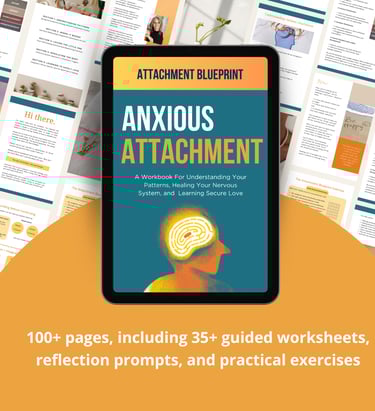
Because insight alone is often not enough, we created a digital workbook designed for the moments anxious attachment actually shows up.
Inside the workbook:
downloadable digital format
fillable pages you can type into or print
guided nervous system exercises
trigger mapping worksheets
reflection prompts for relationships
communication and reassurance patterns
grounding tools for anxious moments
practical exercises you can return to anytime
It is built for people who understand the theory but still need something steady in real moments.

FAQ
Why does silence trigger anxious attachment so quickly?
Because silence often creates uncertainty, and uncertainty can activate your nervous system before your mind has enough evidence to understand what is happening.
Why does silence feel like rejection?
Silence can feel personal when your body is already sensitive to signs of distance. Even without clear evidence, the absence of contact may quickly feel emotionally meaningful.
Why do I panic when someone goes quiet?
The body often reacts to missing connection first. That reaction can create urgency, overthinking, and a strong desire for reassurance before facts are clear.
Can silence feel easier over time?
Yes. With repeated experiences of staying grounded during uncertainty, your nervous system can slowly learn that silence does not automatically lead to loss.